ServicesStorm Damage Repair
Storm Damage Repair in Stroud
Hail and high wind can break shingles, lift flashing and open small gaps that let water into your attic. We find that damage, show you photos and fix it properly. We also check the insulation underneath so your home stays dry and holds its temperature.
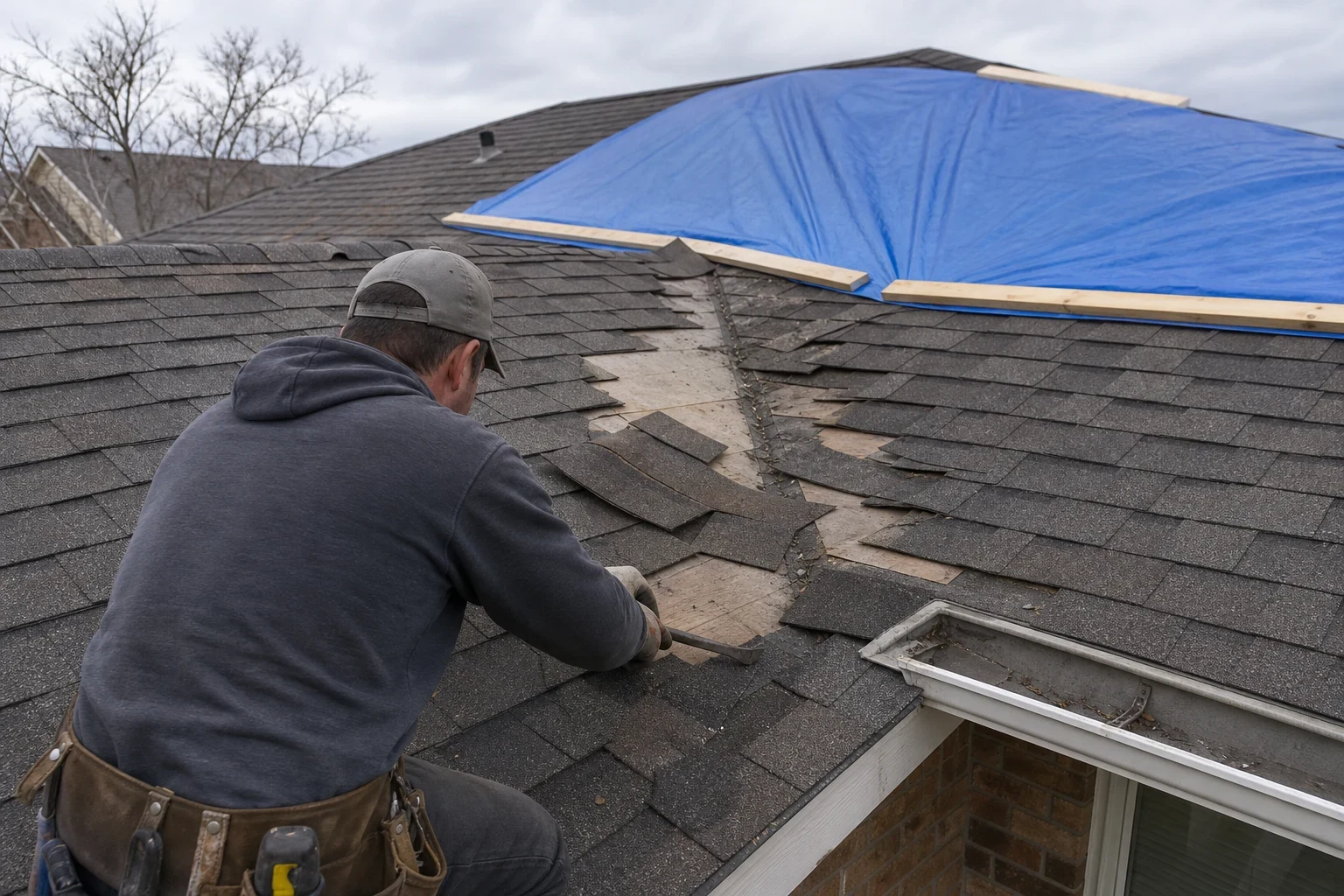
What storm repair covers and when it makes sense
Storm damage repair puts a roof back the way it was before the hail or wind came through. Most of the time that means replacing creased or missing shingles, resealing flashing, and fixing vents and ridge caps. Sometimes the damage covers every slope. Then we tell you plainly that roof replacement is the better use of your money.
The damage is not always easy to see from the yard. A shingle that lost its granules, or got lifted and creased, can still look fine from the ground. It just stops protecting the wood deck under it, and the leak shows up months later.
There is also a cost you feel inside. When water gets into the attic, insulation goes flat and stops doing its job. A torn ridge vent changes how heat leaves the attic. Fixing the roof and dealing with wet insulation helps keep your summer cooling bills where they were.
What the repair includes
- Shingles and ridge caps
- We swap out shingles that are bruised, cracked, creased or gone, and pick replacements that sit well next to the ones you still have. Wind is hard on ridge caps, so every one gets checked.
- Flashing and pipe boots
- High wind pries flashing loose at chimneys, walls and valleys. Hail splits the rubber collars on plumbing vents. We reseal or replace both, because that is where most storm leaks begin.
- Vents and attic airflow
- Dented or torn roof vents and ridge vents get replaced so air moves through the attic again. A hot, closed-up attic keeps your air conditioner running longer every summer day.
- Decking and wet insulation
- If water got in, we probe the decking for soft spots and look for damp or flattened insulation. Rotted boards come out and new ones go in before any shingles do.
- Photos and a written damage list
- You get pictures of everything we found and an estimate broken out by item. Keep it handy if you file an insurance claim.
- A look at your gutters
- Hail dents gutters and wind tears them off the fascia. We check them during the same visit, and our Gutters page explains that work if they need it.
Signs your roof took storm damage
Dents in gutters or vents
Hail big enough to dent soft metal is usually big enough to bruise shingles. It is a fast way to tell whether the roof needs a closer look.
Grit piled at the downspouts
A handful of dark granules at the bottom of a downspout after a storm means shingles lost part of their coating. Bare spots break down quickly in summer sun.
Shingles in the yard or lifted tabs
Any shingle lying on the ground came off a roof. Tabs that flapped in the wind may have lost their seal even if they laid back flat.
Ceiling spots or a damp smell upstairs
After a hard rain, look for a tan or brown ring on a ceiling. Up in the attic, matted insulation or a stale, wet odor tells you water found a way past the shingles.
Rooms that got harder to cool
If upstairs rooms run warmer than they used to after a stormy spring, check the attic. Wet or crushed insulation and a damaged vent can both cause it.
What moves the price of storm repair
Nobody can put an honest number on storm repair from the curb. We get up on the roof and into the attic first. Your estimate then breaks out every item on its own line, which also helps if you need to set it next to an adjuster's report and compare.
How much of the roof is hit
A few torn shingles on one slope is a small job. Hail bruising across several slopes takes more material and more hours.
What is under the shingles
Soft decking and soaked insulation add cost. Leave them in place, though, and the same problem shows up again.
Matching older shingles
Some colors and styles have been discontinued. Tracking down a close match or a sensible alternative can change the material cost.
Pitch and access
Steep roofs need more safety gear and go slower. Trees, fences or a tight side yard add time for carrying material up and down.
Vents, flashing and boots
Every damaged vent, pipe boot or run of flashing gets its own line, so you can see each one priced.
How a storm repair job goes
- 1
Start with a phone call
Give us a rough date for the hail or wind and anything you noticed, like dented gutters or a new ceiling stain. Then we pick a day that works for you to come out.
- 2
Roof and attic inspection
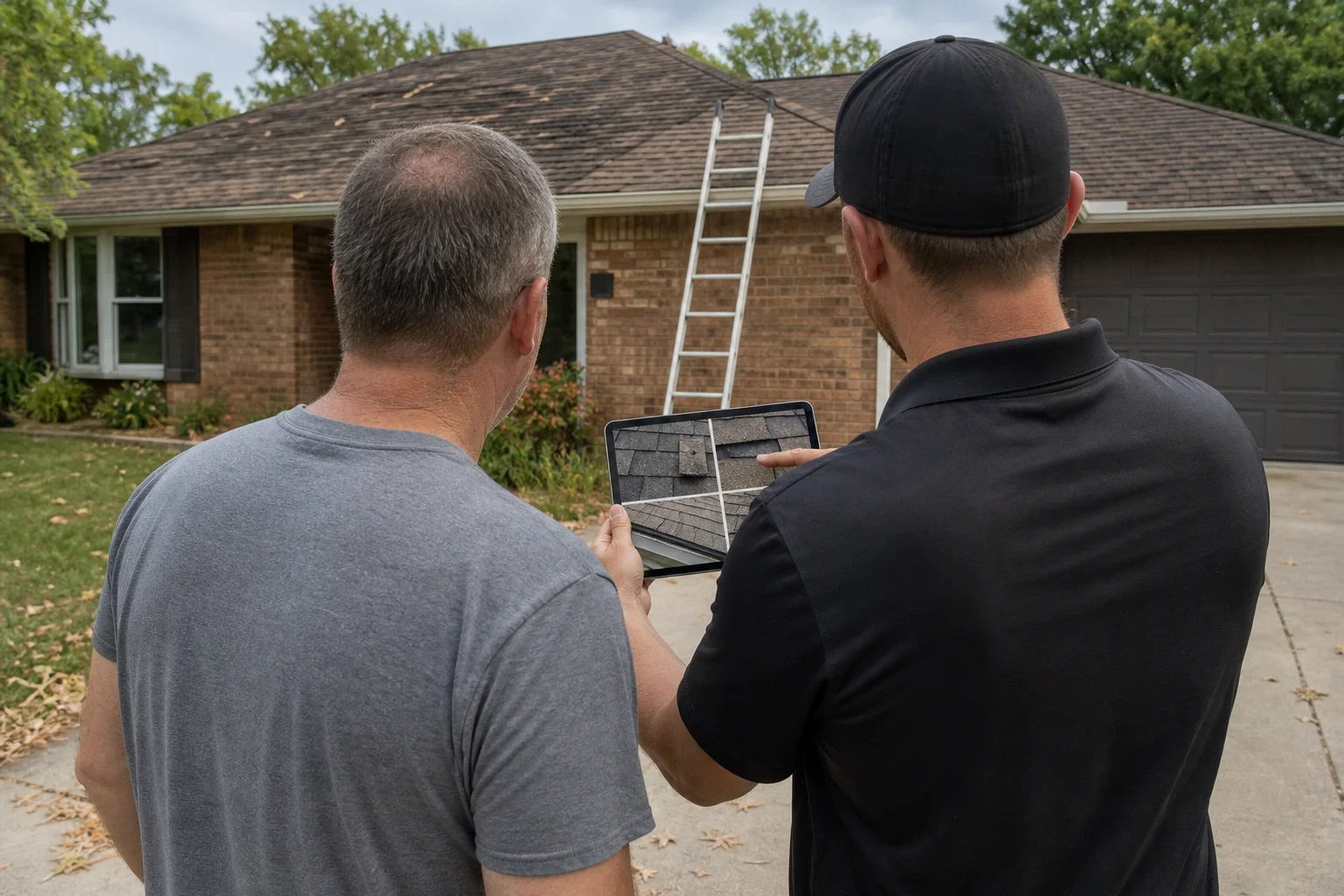
We walk every slope, mark hail hits and wind damage, then go up into the attic to check the decking and insulation. You get photos of all of it.
- 3
A straight repair-or-replace answer
We tell you whether a repair will hold or the damage is too widespread for one. If you are filing a claim, we explain how the process usually goes and can meet the adjuster on the roof so the damage we marked gets a look. What gets covered is up to your insurer, not us.
- 4
Repair day
We cover plants and protect the driveway, tear off the damaged material, fix decking and flashing, then install new shingles and vents. Smaller repairs often wrap up in a day, and if yours will take longer, you hear that from us beforehand.
- 5
Cleanup and a final walk
We sweep the yard with a magnet for nails, haul off the old material and walk the finished roof with you.
Storm damage questions
Do I call my insurance company first, or you?
It often makes sense to let us check the roof before you file. Minor damage can come in under your deductible, and it's better to learn that up front. When the damage is real, our photos and notes give the adjuster something concrete to review. What gets covered is up to your policy and your insurer.
Can you just patch the damaged spots?
Often, yes. When the damage sits in a few areas, a repair is the right call. When hail bruised shingles over the whole roof, patches leave you chasing new leaks, and we will tell you that.
Can storm damage really raise my energy bills?
It can. Water that reaches the attic soaks insulation, and damp insulation slows heat far less than dry insulation does. A damaged ridge or box vent traps hot air in summer. Neither shows on the ceiling right away, so we check the attic on every storm visit.
How do I know the repair will last?
Our crew brings over 20 years of combined roofing experience, and a lot of it is hail and wind work. Our repairs come with a lifetime workmanship warranty, and we go over what it covers before we start.
Do you handle storm repair outside Stroud?
Yes. We also work in Chandler, Cushing, Bristow, Drumright and Perkins.
Get the roof looked at before the next storm
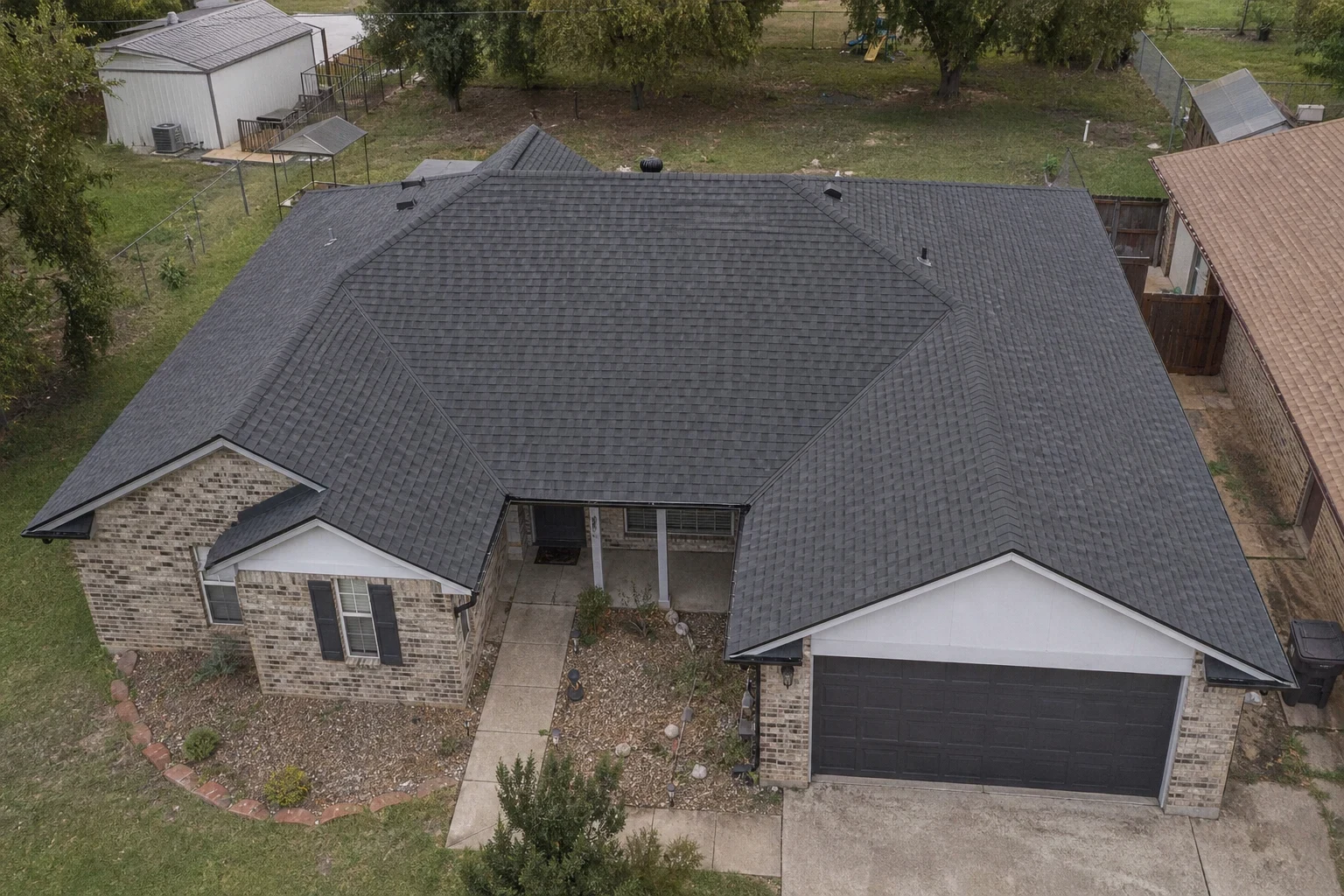
A small break in a shingle lets in more water every time it rains. We will inspect the roof and attic, show you photos and give you a written estimate.