ServicesCommercial Roof Replacement
Commercial Roof Replacement in Stroud, OK
When patching a flat or low-slope roof stops working, we tear it off and build it back right. New insulation, proper drainage and a reflective membrane that keeps the building cooler. We plan the work so your doors can stay open.
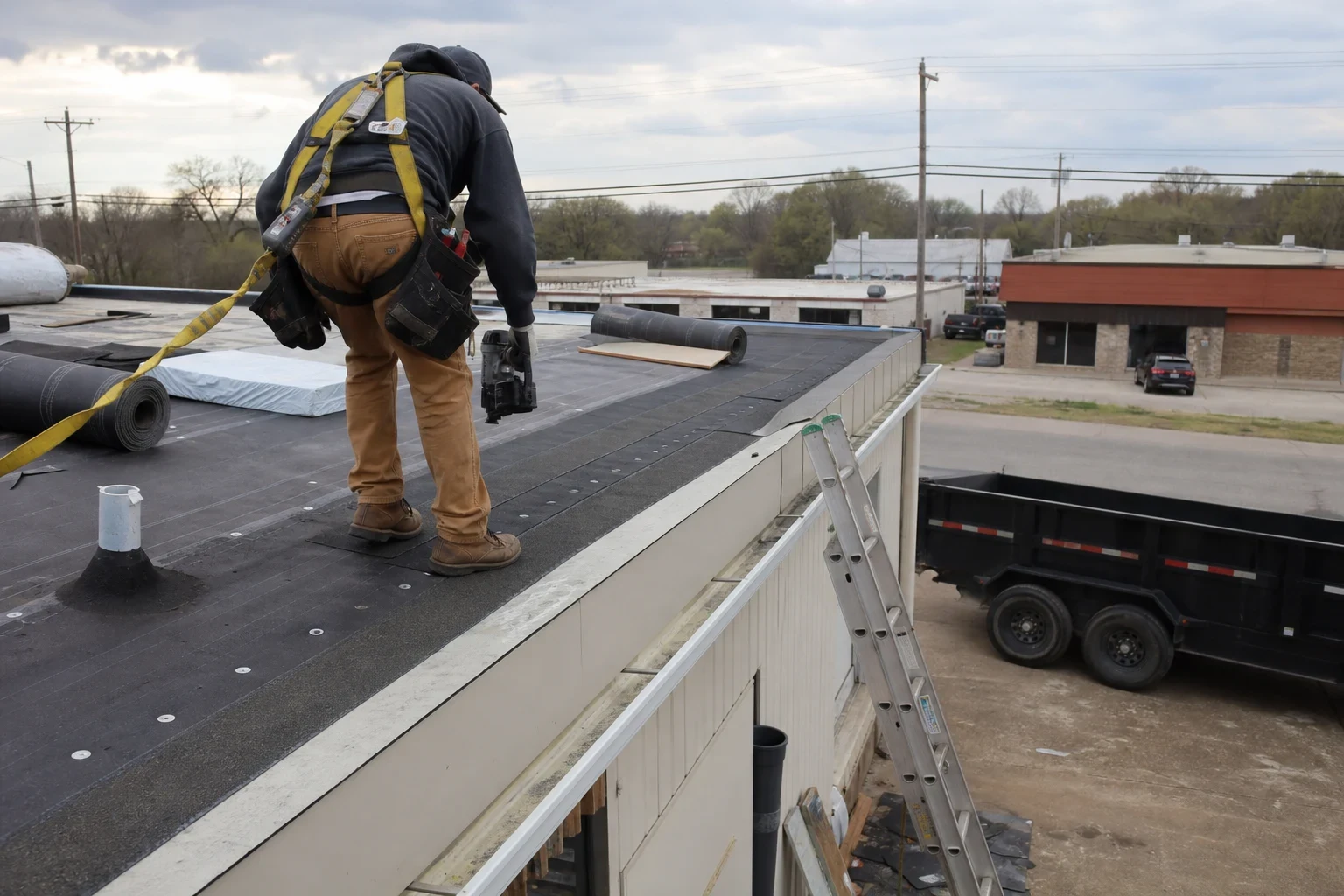
When a Commercial Roof Needs Replacing
Most small commercial buildings have a low-slope roof: TPO, EPDM, modified bitumen or metal. These roofs fail slowly. Seams open, water gets under the membrane and soaks the insulation. Once that insulation is wet, it stops insulating and starts holding water against the deck.
At that point, more patches just buy time. A replacement fixes the leak and the energy loss at once. We put down new insulation board, often tapered so water runs to the drains, then a white or light-colored membrane that reflects summer sun instead of soaking it up. Less heat through the roof means the cooling units run less.
Our crew brings over 20 years of combined roofing experience to these jobs. If your roof can still be saved, we will tell you, and point you to commercial roof repair instead.
What the Replacement Includes
Core cuts and moisture check
Before we price anything, we cut small samples to see how many layers are up there and whether the insulation is wet. That tells us if a full tear-off is needed.
Tear-off down to the deck
We remove the old membrane and wet insulation. Damaged decking gets replaced so the new roof has something solid to fasten to.
New insulation board
Fresh insulation goes down across the whole roof. Tapered board can be added to fix spots where water has been sitting. This is where most of the energy savings come from.
Reflective membrane
We install the membrane type that fits the building and budget, with seams welded or sealed to spec.
Flashing at walls, curbs and drains
Parapet walls, HVAC curbs, vents and drains get new flashing. These are the spots where most commercial leaks start.
Cleanup and walkthrough
We haul off all debris, run a magnet for loose fasteners around the lot, and walk the finished roof with you.
Signs Your Building Needs a New Roof
Water that won't drain
Ponding that sits more than a couple of days after rain means the roof has sagged or the drainage is wrong. Standing water breaks down most membranes fast.
A leak that keeps moving
You patch a drip over the back office, and a week later the stain turns up down the hall. That usually means water is running under the membrane and spreading through wet insulation.
Soft or spongy spots
A roof that gives underfoot usually has soaked insulation or a damaged deck below.
Rising cooling bills
When wet or crushed insulation stops working, the units have to make up the difference. A climbing summer bill with no other cause is worth a look.
Cracked, blistered or shrinking membrane
Old membranes pull away from the edges, crack at seams and blister in the sun. Past a point, there is nothing left to patch to.
How the Job Runs
- 1
Roof walk and core samples
We go up, check every seam, curb and drain, and take core cuts. You get photos of what we found.
- 2
Written estimate and plan
We lay out the work line by line: tear-off, insulation, membrane, flashing and any deck repairs. We also talk through which hours and areas of the building need to stay clear.
- 3
Permit and material order
We pull the permit and schedule material delivery so it sits on the roof or site for as short a time as possible.
- 4
Tear-off and install in sections
We open only as much roof as we can close up the same day. That keeps the inside dry if weather turns.
- 5
Final check and warranty
We walk the finished roof with you and handle the final inspection. Our work is backed by a lifetime workmanship warranty.
What Moves the Price
Every building is different, so we price after we have been on the roof and seen the core samples. The biggest swings come from what is under the old membrane, not the membrane itself. You get the numbers in writing before any work starts.
- Roof size and shape
- Square footage matters most. Lots of curbs, penetrations and parapet walls add flashing work.
- Layers and wet insulation
- More old layers mean more tear-off. Soaked insulation has to come out and be replaced across the affected area.
- Deck condition
- Rusted metal deck or rotted wood has to be fixed before the new roof goes on. We show you photos of any damage we find.
- Membrane and insulation choice
- Thicker insulation and heavier membranes cost more up front but cut heat gain and last longer. We explain the trade-off plainly.
- Access and scheduling
- Tight lots, tall buildings or work that has to happen after hours can add labor time.
Commercial Roof Replacement Questions
Something not covered here? (405) 855-9152
Can my business stay open while you replace the roof?
In most cases, yes. We work in sections and close each one up the same day. We will plan around your busy hours and let you know which entrances or parking spots we need and when.
Can you put a new roof over the old one?
Sometimes. If there is only one existing layer and the insulation is dry, a recover can be an option. If the core samples show wet insulation, it has to come off, or the new roof traps that moisture.
Will a new roof actually lower my energy bills?
It often helps, especially if the old insulation was wet or thin. A reflective membrane keeps the roof surface much cooler in summer sun, and new insulation slows heat getting in. How much you save depends on the building and how it is cooled, so we won't promise a number.
Which membrane is best for my building?
It depends on the roof's slope, foot traffic, equipment up there and budget. TPO is a common choice for its reflective surface, EPDM holds up well for the money, and metal fits some buildings better. We go over the options after we see the roof.
What warranty comes with the work?
We stand behind our installation with a lifetime workmanship warranty. Membrane and material warranties come from the manufacturer, and we go over those with you before the job starts.
How long does the job take?
That depends on the size of the roof, how many layers come off and the weather. We give you a schedule in the written estimate and keep you posted if rain pushes anything back.
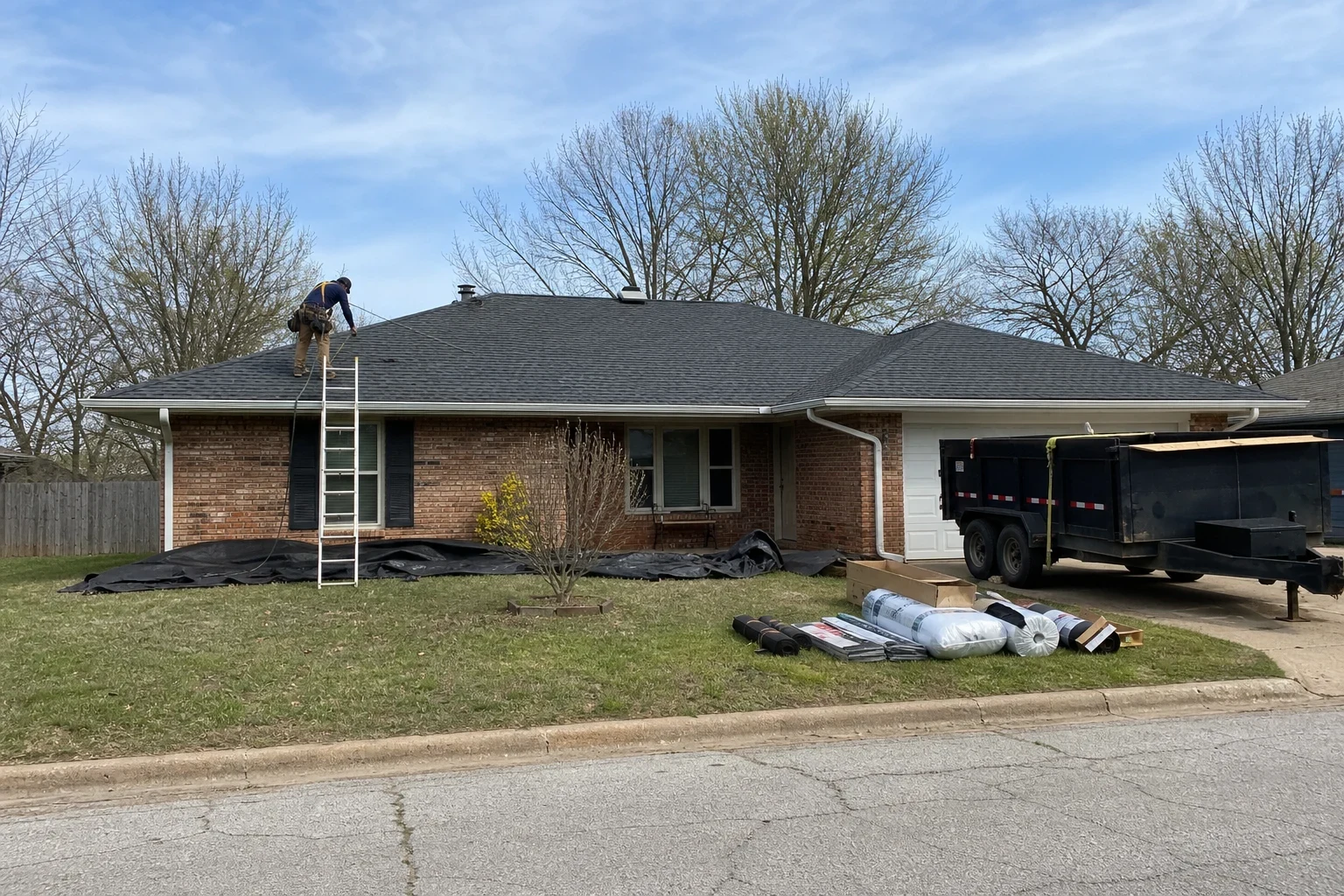
Let's Look at Your Building's Roof
We will walk the roof, take core samples and tell you straight whether it needs replacing or can be repaired. Get your quote by phone.